
A conversation with NEXT.IO
What Brand Building Actually Taught Us About Games
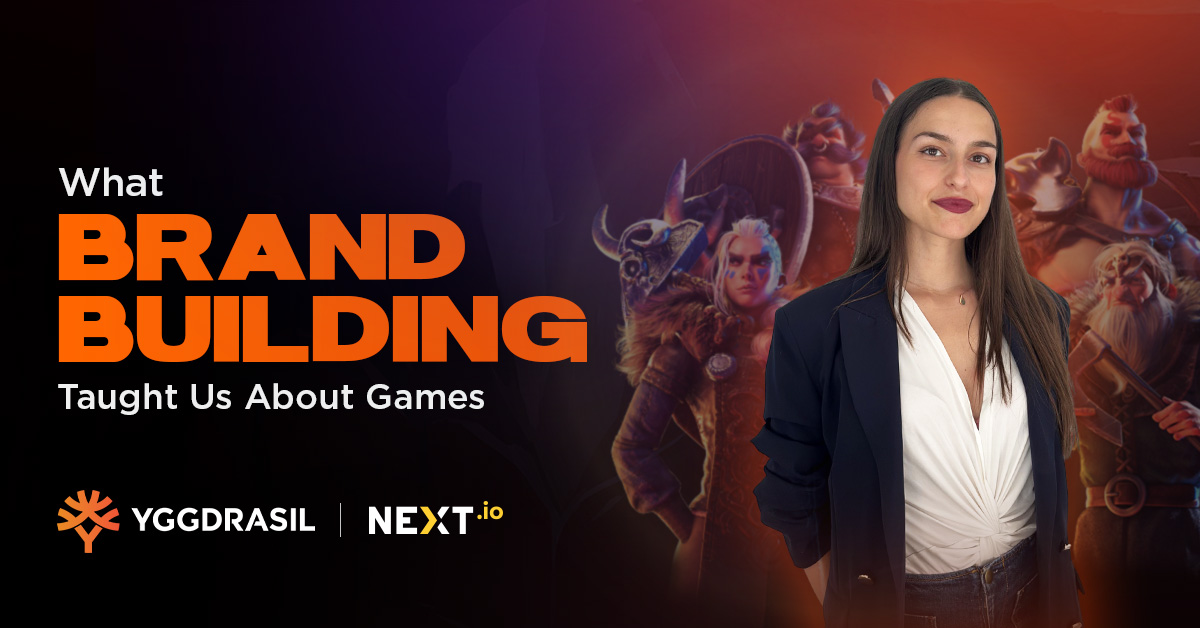
Thirteen years ago, Yggdrasil entered the market as a new game supplier with a clear ambition: to do things differently. The years that followed showed that Yggdrasil was not only capable of fulfilling that ambition and landing amongst the biggest game providers in the world, but also of creating a very strong and unique brand that would separate the company from the rest of the market.
It started with the name.
In Norse mythology, Yggdrasil is the great ash tree that connects the nine worlds – a symbol of a universe in constant expansion. That choice of name helped position Yggdrasil closely to Viking-inspired storytelling and influenced the creation of its most iconic series, Vikings Go. With time, the series grew into a multimillion success, with visuals, stories, and mechanics evolving with each new release that spans over a decade.
But the real lesson goes beyond a single franchise. It reveals a dynamic that is often underestimated in the industry: strong brands drive game performance, and successful games strengthen the brand in return.
Based on that experience, here are three common brand myths that don’t hold up in practice.
Debunk #1: “If the game is good, it will succeed on its own”
In theory, quality should be enough. In reality, it rarely is! Today’s game lobbies are crowded, and players don’t evaluate every title equally. They scan, recognize, and choose quickly. Familiarity plays a much bigger role than most teams admit.
A strong brand reduces that friction. When players recognize a visual style, a tone, or a recurring series, they approach a game with a level of trust already in place. The experience doesn’t start from zero, because it starts from expectation.
This has real implications for how games are developed and positioned:
- Consistency in visual identity isn’t just aesthetic; it builds recognition over time.
- Recurring series creates continuity, so each new release doesn’t have to reintroduce itself.
- Even when the concept changes, the feeling of the game remains familiar.
For example, when a title like Vikings Go to Vegas launches, it doesn’t feel entirely new to the player. The setting may change, but the energy, characters, and underlying experience are already understood. That familiarity lowers the barrier to entry, and the brand does part of the work before gameplay even begins!
Debunk #2: “You need to constantly replace old hits with new ones”
One of the most persistent habits in the industry lately is the obsession with the next release. Games are often treated like short-term campaigns: launch, promote, and move on.
But this mindset comes at a cost, because it leaves long-term value on the table, high-performing games are not just revenue spikes… they are assets.
The relationship between brands and games also works in the opposite direction. High-performing games don’t just generate short-term revenue; they contribute to long-term brand value.
At Yggdrasil, “Vikings Go” was never treated as a one-time success. Instead of asking what would replace it, the more useful question was: how far can it go if we keep investing in it? That shift in thinking leads to very different decisions:
- Instead of abandoning a successful identity, you evolve and extend it
- Instead of resetting player familiarity, you build on it
- Instead of chasing constant novelty, you reinterpret proven concepts in new ways
“People often ask us how we escape the "prison’ of our hit titles like “Vikings Go”. That’s a bit of a naive way to look at it, and it reflects a broader industry trend of constantly pushing for new releases. So, I ask them, why escape? If a game continues to perform and deliver value years later, there is no reason to abandon it.
Data shows that players keep coming back to it, and it works for a reason. I believe that in slot games, that relevance can last much longer than people expect. Instead of replacing it, you can evolve how it’s positioned - through visibility, new fun contexts, or by building a series around it. This is what we did at Yggdrasil”
Maria Gkezepoglou, Marketing Manager at Yggdrasil Gaming:
Debunk #3: “The more niche the brand looks, the more it limits growth”
There is a common assumption that a more “defined” brand risks narrowing its audience. But in a saturated market, the bigger risk is the opposite – being too generic to be remembered.
Yggdrasil’s Viking-inspired roots could be seen as niche, but they created a strong starting point. Instead of limiting the portfolio, that identity made it easier to expand into different themes while remaining recognizable. Games like “MultiFly”, “Raptor”, and “Holmes and the Stolen Stones” may differ in setting, but they carry a similar level of intensity, clarity, and structure that players associate with the brand.
This is where growth comes from. Not from trying to appeal to everyone at once, but from building something identifiable that can stretch across different formats and ideas. At Yggdrasil, we believe that a focused brand doesn’t reduce reach, it gives the portfolio a center of gravity. And that’s what allows us to grow without losing direction.